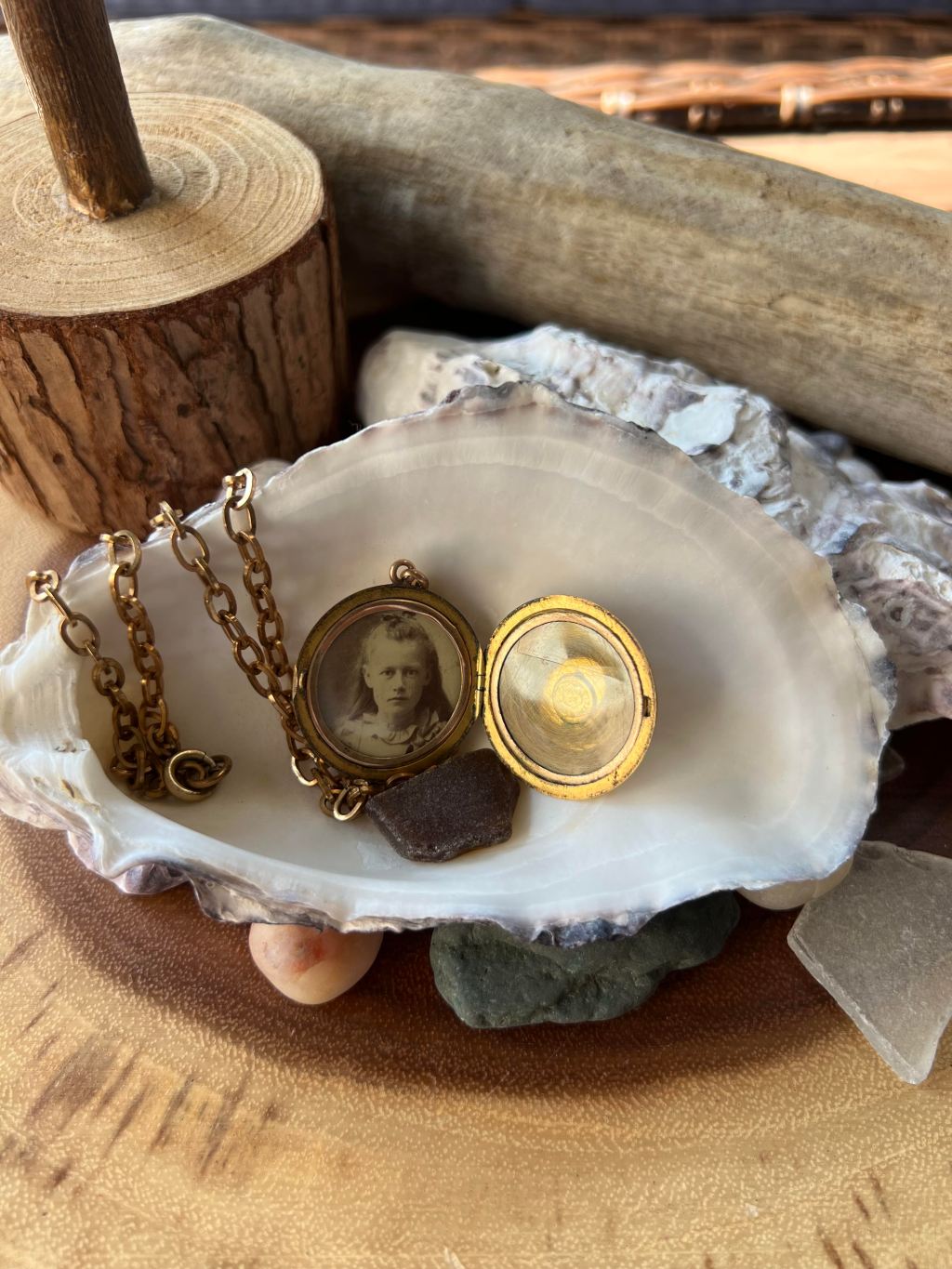
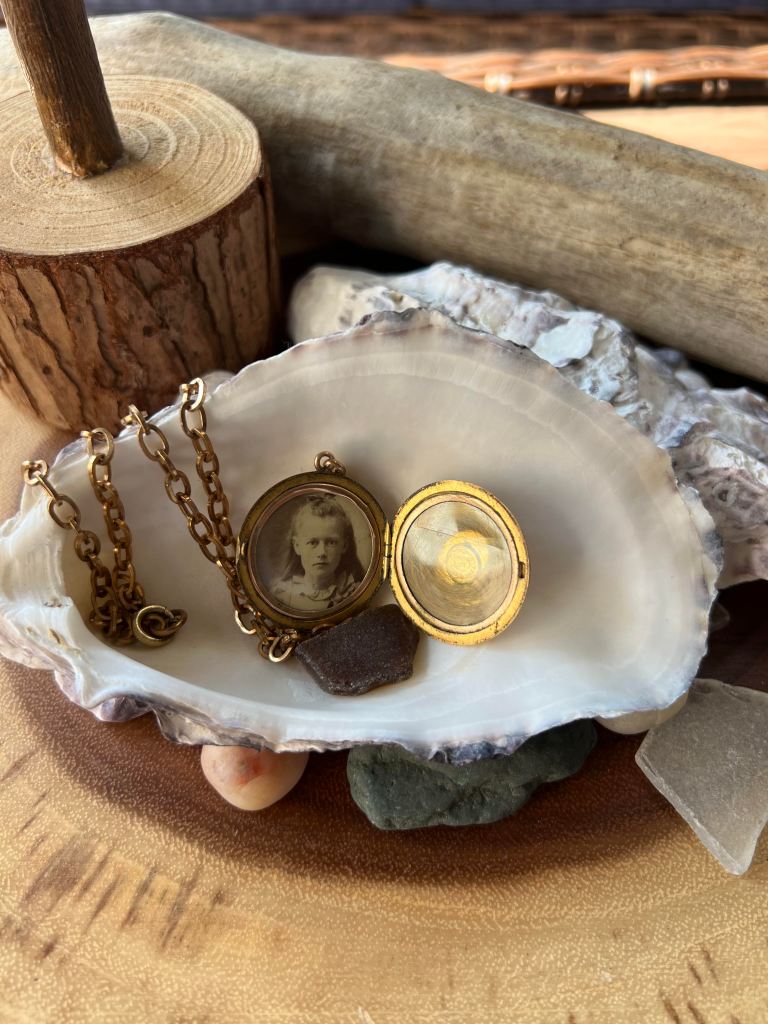
Mourning lockets, common since the 16th century, became exceptionally popular during the Victorian era, particularly after Queen Victoria’s prolonged mourning for Prince Albert in the 1860s. These lockets contained personal mementos like hair or photos, transforming into cherished keepsakes and “secular relics” for the bereaved. Initially featuring macabre symbols or black materials like jet and onyx, the design evolved to include gentler motifs and became more personalized with initials and dates, reflecting shifting cultural views on grief.
The Victorian Era (19th Century)
- Queen Victoria’s Influence: The public display of grief by Queen Victoria after the death of Prince Albert in 1861 significantly popularized mourning lockets and jewelry.
- Hairwork: A key aspect of this era was the inclusion of a lock of the deceased’s hair, a practice known as hairwork. This provided a tactile and lasting memento for the wearer.
- Symbolic Contents: In addition to hair, lockets might hold a painted portrait or, later, a photograph of the loved one.
- Materials and Design: Designs often used black materials like jet, onyx, and black enamel to reflect the somber occasion.
- Widespread Practice: Mourning jewelry became widespread, especially during the American Civil War, as a way to keep memories of lost loved ones close.
Late Victorian and 20th Century
- Shifting Styles: As the 20th century began, mourning jewelry became less ornate.
- Personalized Inscriptions: The focus shifted to more subtle designs featuring initials, dates, and short inscriptions suitable for everyday wear.
- Cultural Changes: This transition reflected broader societal shifts toward more private expressions of grief and a focus on celebrating the life of the deceased rather than solely on death.
Circa: 1880s | Origin: Europe or United States | List Price: $250 | Shipping: $6
To purchase, please click here to visit the WhatNot Shop.

 Palingenesis Antiquities