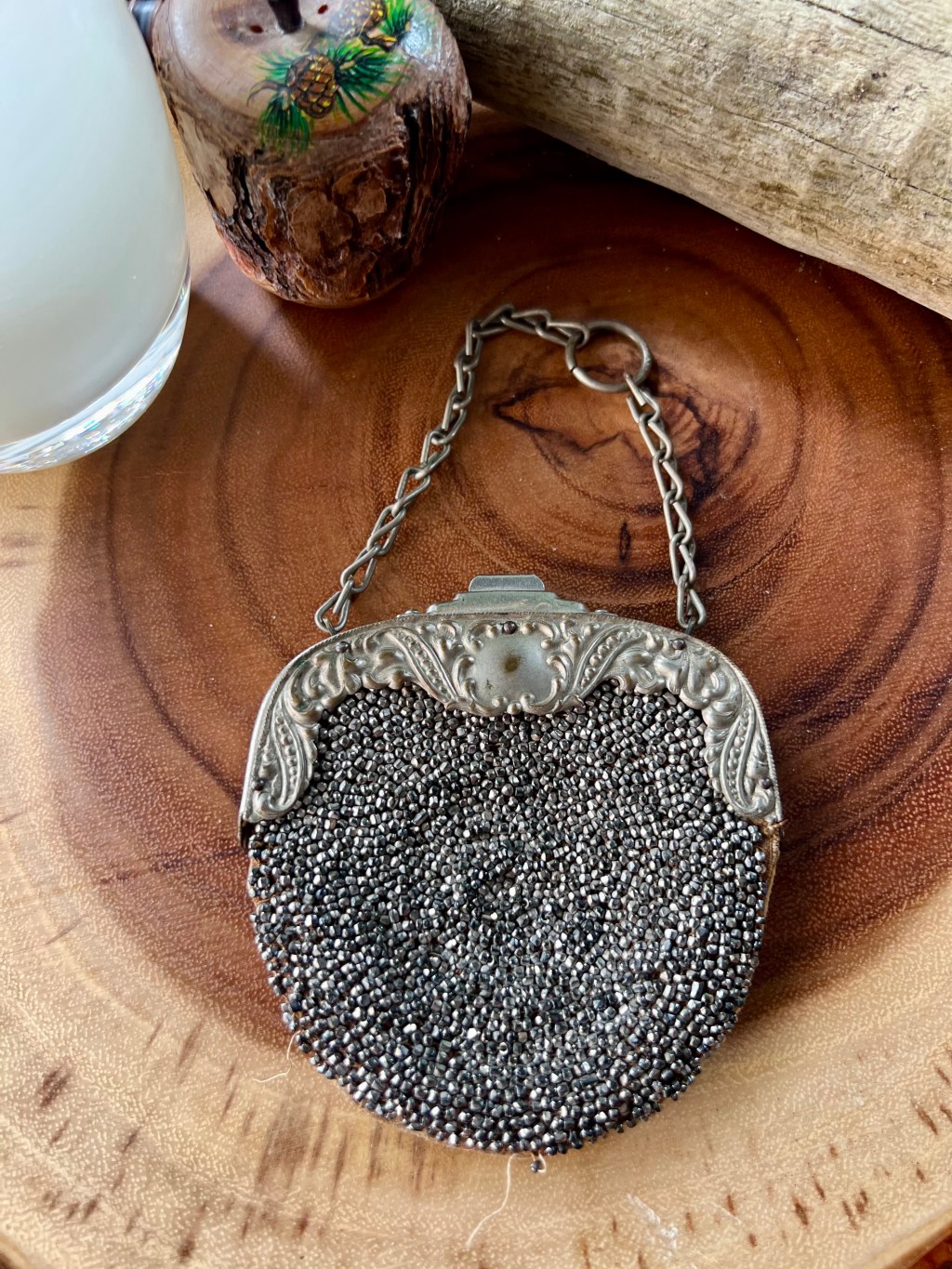
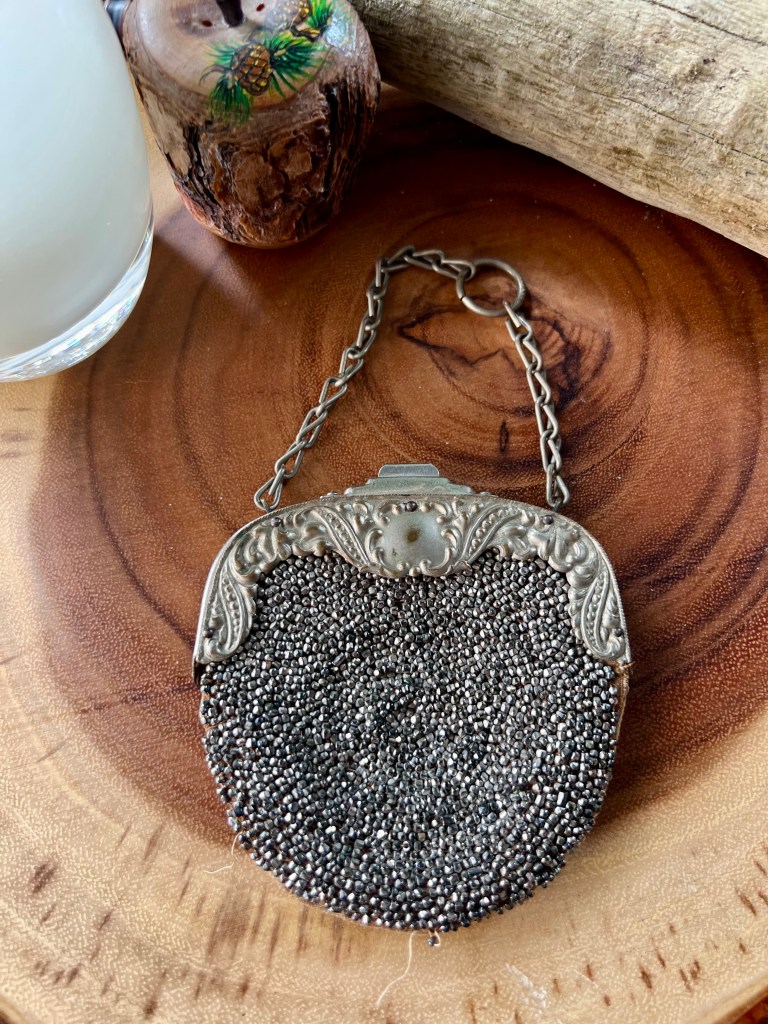
In the late 18th century into the early 20th century, finger purses – or also known as a miser purse or reticule – were small coin or accessory purses carried by both men and women. During the Edwardian Era, these tiny bags often made from beads, meta mesh or fine crochet, were used to hold a few essentials like coins or a mirror. Their design evolved from simpler drawstring styles to include metal frames, decorative clasps and even integrated into other accessories like chatelaines, with the late Victorian and early Edwardian periods seeing a rise in practical, smaller leather hand-bags.
Types of finger purses can include:
- Miser purses, a long tubular purse with a slit opening and sliding rings at the ends to secure coins, allowing denominations to be separated and identified by touch.
- Beaded purse / reticules, are a drawstring bag, often elaborately decorated with glass or steel beads that were popular for day and evening wear.
- Metal mesh purses, rose to popularity with the development of metal mesh machines (as seen heavily by the luxury designer of the era, Whiting & Davis), which were bigger to allow room for coins, mirrors and their calling cards.
This purse in particular is a true example of a beaded finger purse as it encompasses it’s beautiful silver beads and suede interior. On the clasp of the purse, you will find that this purse was made July 2nd, 1901. It wouldn’t be uncommon either to have seen this worn by a woman either adorning it on their chatelaine around the house or in society by their finger.
Circa: July 2, 1901 | Origin: United States | List Price: $85 | Shipping: $6
To purchase, please click here to visit the WhatNot Shop.

 Palingenesis Antiquities